
This article is for general informational purposes only and does not replace professional medical advice. Consult a licensed healthcare provider for guidance specific to your condition.
Effective disinfection depends on choosing the right product for the right surface and using it correctly, not just buying the strongest-sounding bottle on the shelf. This guide breaks down the main categories of disinfection products available for UAE homes and small clinics, what to look for when comparing them, and mistakes that reduce how well they actually work. It’s aimed at households, caregivers, and small healthcare practices building or maintaining a hygiene routine.
Who Needs Disinfection Supplies
Every household benefits from basic disinfection habits, especially in a climate where warmth and humidity can encourage bacterial and viral spread indoors. The need is greater for homes with young children, elderly residents, or anyone managing a compromised immune system. Clinics, nursing homes, and other care facilities require a more structured disinfection routine covering surfaces, equipment, and staff hygiene, often guided by their own infection-control protocols.
Types of Disinfection Products Available
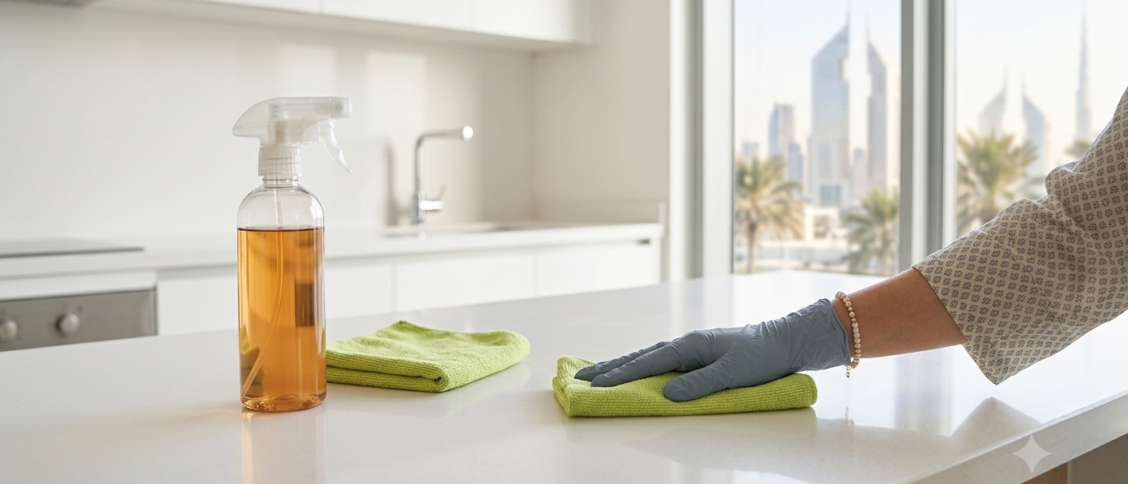
- Surface disinfectant sprays and wipes — for countertops, door handles, medical equipment exteriors, and other frequently touched surfaces.
- Hand sanitizers and hand hygiene products — alcohol-based gels and foams for quick hand disinfection between tasks.
- Sterilization solutions — used for soaking or treating reusable instruments and equipment in clinical settings.
- Fumigation and air disinfection tools — devices or sprays designed to reduce airborne contaminants in enclosed spaces.
- Personal protective equipment (PPE) — gloves, masks, and gowns that reduce transmission during cleaning or patient contact.
- Laundry and fabric disinfectants — for linens, uniforms, and soft furnishings that come into regular contact with people.
What to Look For
When comparing disinfection products, a few practical factors matter more than brand names:
- Surface compatibility — check that a product is suitable for the material you’re treating (metal, plastic, fabric, or skin), since the wrong formulation can damage equipment or irritate skin.
- Contact time — every disinfectant needs a minimum amount of time on a surface to work; read the label rather than wiping it off immediately.
- Concentration and dilution instructions — some products need to be diluted correctly to be both effective and safe.
- Regulatory approval — for the UAE market, look for products sourced through DHA-approved retailers, which supports consistent quality and labeling standards.
- Storage requirements — some disinfectants are sensitive to heat and sunlight, both common in UAE conditions, so check the label for storage guidance.
Common Mistakes to Avoid
- Wiping a surface dry immediately after applying disinfectant, before the required contact time has passed.
- Mixing different chemical disinfectants together, which can create unsafe reactions.
- Reusing wipes or cloths across multiple surfaces without replacing or washing them.
- Storing disinfectant bottles in direct sunlight or hot vehicles, which can reduce effectiveness.
- Treating hand sanitizer as a full replacement for handwashing with soap and water when hands are visibly soiled.
- Skipping PPE when handling stronger clinical-grade disinfectants.
Building a Routine for Homes vs. Clinics
A home routine is usually simpler: regular surface wiping in kitchens and bathrooms, hand hygiene, and periodic deep cleaning of shared spaces. Clinics and care facilities typically need a documented schedule covering high-touch surfaces, shared equipment, waiting areas, and instrument sterilization, along with staff training on correct product use. If you manage a facility, your infection-control lead or a DHA-guided protocol is the right source for the specific schedule and products your setting requires.
Whether you’re restocking household basics or sourcing supplies for a clinic, you can explore a full range of options in Medicalmart’s disinfection category at https://www.medicalmart.ae/category/disinfection, with delivery across all seven Emirates and bulk ordering available for institutions.
Frequently Asked Questions
What’s the difference between a disinfectant and a sanitizer?
Disinfectants are generally formulated to kill a broader range of germs on surfaces, while sanitizers (like hand sanitizers) reduce germ levels to a safer threshold, often on skin; check product labels for their specific intended use.
How long should disinfectant stay on a surface before wiping it away?
This varies by product — most labels specify a required contact time, often a few minutes, and wiping too soon can reduce effectiveness.
Are the same disinfectants safe to use around children and pets?
Not always; some formulations require ventilation, dilution, or drying time before the area is safe for children or pets, so always check the label or ask your pharmacist.
Do clinics need different disinfectants than homes?
Clinics often use higher-grade or hospital-specification disinfectants for equipment and instrument sterilization, guided by their infection-control protocols, whereas household products are typically formulated for general surface use.
