
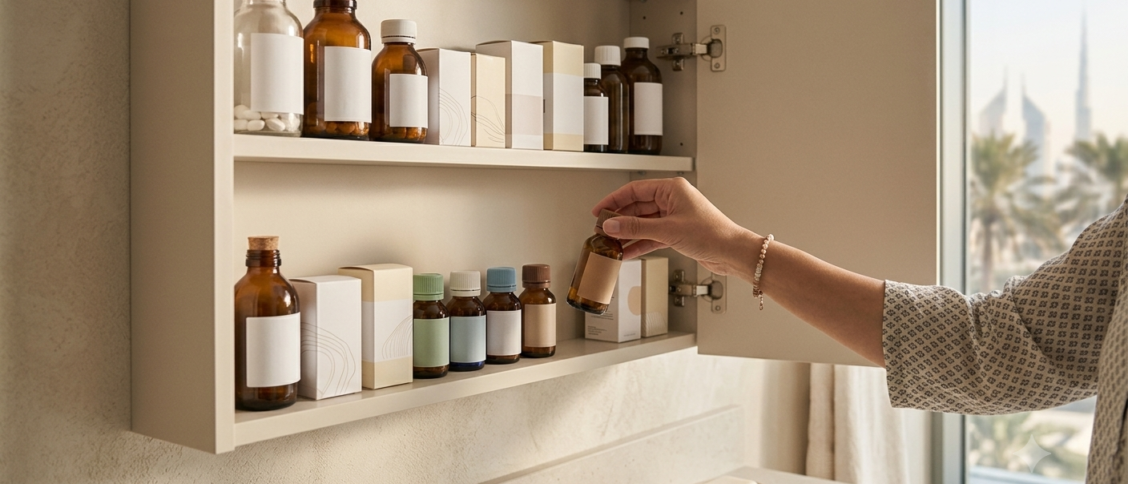

This guide covers the broad categories of over-the-counter (OTC) medicine that many UAE households find useful to keep on hand, along with practical tips for choosing, storing, and restocking them. It focuses on what kinds of products to have available, not specific doses or which product to use for which symptom — that decision belongs with your pharmacist or doctor.
This article is for general informational purposes only and does not replace professional medical advice. Consult a licensed healthcare provider for guidance specific to your condition.
Who Needs This
Almost every household benefits from a small, well-organized OTC medicine cabinet — for minor everyday complaints, travel, or simply peace of mind. Families with children may want pediatric-formulated options alongside adult ones. Caregivers managing older relatives or people with chronic conditions often keep a slightly broader range on hand, and it’s worth checking with a pharmacist about anything that might interact with existing prescriptions. Offices, schools, and small clinics also tend to keep a basic OTC supply for minor incidents during the day.
Categories Worth Having on Hand
Rather than specific brands, think in terms of categories:
- Pain and fever relief – General-purpose options for everyday aches or fever, available in various forms (tablets, syrups, sachets).
- Cold and allergy relief – Products addressing congestion, cough, or seasonal allergy symptoms, which can be more relevant given the UAE’s dust and rapid indoor-outdoor temperature shifts.
- Digestive support – Options for common issues like indigestion, mild upset stomach, or occasional constipation.
- Rehydration solutions – Oral rehydration products are especially useful in the UAE climate, where heat and humidity increase the risk of dehydration.
- First-aid supplies – Antiseptics, adhesive bandages, and basic wound-care items to pair with any medicine cabinet.
- Topical treatments – General-purpose creams for minor skin irritation, insect bites, or sunburn.
Your pharmacist can help you match specific products within these categories to your household’s needs and any existing medications.
What to Look For When Buying
A few practical factors help when comparing OTC products online:
- Clear labeling – Look for products with clear ingredient lists, usage instructions, and expiry dates printed legibly.
- Age-appropriate formulations – Many categories offer separate adult and pediatric versions; checking this before ordering avoids a mismatch.
- Format – Tablets, liquids, effervescent sachets, and chewables all suit different preferences and ages; choosing the right format can make a real difference for children or people who have difficulty swallowing pills.
- Source and approval – Buying from a DHA-approved retailer helps ensure products are sourced and stored appropriately before they reach you.
- Storage requirements – Some products need to be kept away from heat and direct sunlight, which matters throughout the UAE’s warmer months.
Common Mistakes to Avoid
A common misstep is letting a medicine cabinet go unchecked for months or years, so that products expire quietly and aren’t available when actually needed. Another is assuming one product works for every household member regardless of age or existing health conditions — this is exactly the kind of decision a pharmacist can help with. Storing medicine in a bathroom cabinet exposed to humidity, rather than a cool, dry spot, can also shorten shelf life. Finally, relying solely on OTC products for symptoms that persist or worsen, instead of seeking medical advice, is best avoided — OTC medicine is meant to manage minor, short-term issues.
Building a Restocking Routine
A simple approach is to review your household’s OTC supply every few months, replace anything nearing its expiry date, and keep a short list of what typically runs low first (rehydration sachets and bandages are common repeat purchases). For UAE households, ordering online means standard delivery of 7–10 days for in-stock items with a flat AED 20 shipping fee across all seven Emirates, so it’s worth planning restocks a little ahead of when you expect to need them. You can browse the full medicine category at https://www.medicalmart.ae/category/medicine to see what’s available and compare formats and pack sizes.
Frequently Asked Questions
What OTC medicine categories should a basic household kit include?
A reasonable starting point includes pain and fever relief, cold and allergy products, digestive support, rehydration solutions, and basic first-aid supplies, with pediatric versions if children are in the household.
Can I buy OTC medicine online without a prescription in the UAE?
Yes, OTC medicine, supplements, and medical supplies do not require a prescription and can be purchased online from a DHA-approved retailer; prescription medicines are handled separately through a licensed pharmacy.
How should OTC medicine be stored at home?
Most OTC products should be kept in a cool, dry place away from direct sunlight and out of reach of children, with periodic checks for expiry dates.
When should I see a doctor instead of using OTC medicine?
If symptoms are severe, persistent, or worsening, or if you’re unsure whether an OTC product is appropriate given other medications or conditions, it’s best to consult your doctor or pharmacist rather than self-treat.
