

This article is for general informational purposes only and does not replace professional medical advice. Consult a licensed healthcare provider for guidance specific to your condition.
This guide covers who typically uses lumbar support belts, the different types available, and the key factors to consider before buying one, so you can decide whether a support belt fits your daily routine or work environment.
Who Uses Lumbar Support Belts
Lumbar and back support belts are commonly used by people with physically demanding jobs (warehouse staff, delivery drivers, healthcare workers who assist with patient transfers), office workers who sit for long hours, and individuals managing occasional lower back discomfort. Pregnant women sometimes use maternity-specific support belts for added comfort, and older adults may use lighter supports for daily stability. Because back discomfort has many possible causes, from muscle strain to posture-related fatigue to more significant spinal issues, a support belt is not a one-size-fits-all solution, and your healthcare provider can advise whether one is appropriate for your specific situation.
Types Available
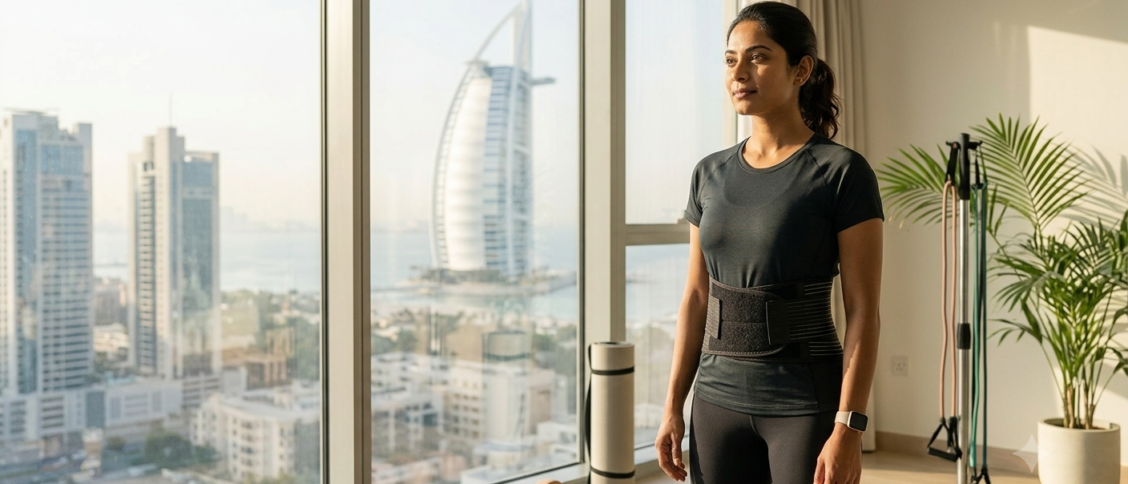
Elastic compression belts are lightweight, stretchy belts that offer mild support and a gentle reminder to maintain posture. They’re a common choice for everyday use during desk work or light activity.
Rigid or semi-rigid lumbar belts include firmer panels or stays along the lower back, offering more structured support. These are often used for heavier lifting tasks or by people who need additional stability during physical work.
Weightlifting-style support belts are wider and more rigid, designed specifically for use during lifting or manual handling tasks rather than all-day wear.
Maternity support belts are shaped differently to accommodate a growing abdomen while supporting the lower back and hips.
Posture-correcting braces combine shoulder straps with a lower back panel, aimed at encouraging upright sitting or standing posture rather than providing heavy lumbar support alone.
What to Look For
- Fit around the waist: Measure your waist circumference and check it against the manufacturer’s size chart; a belt that’s too loose won’t stabilize the lower back, and one that’s too tight can be uncomfortable during long wear.
- Breathable fabric: Given the UAE’s warm climate, especially for those wearing a belt during outdoor or warehouse work, breathable or perforated materials help reduce discomfort from heat and sweating.
- Adjustability: Look for adjustable straps or closures so compression can be fine-tuned throughout the day.
- Intended use: A belt designed for occasional office use is generally lighter than one designed for repeated manual lifting; matching the belt to your actual activity matters more than choosing the most rigid option.
- Ease of use: For workplace settings where a belt may be put on and removed several times a day, simple Velcro or buckle closures are more practical than complex lacing systems.
Common Mistakes to Avoid
A frequent mistake is wearing a support belt continuously, including while resting, when it’s intended only for specific activities like lifting or long shifts — prolonged unnecessary use can reduce core muscle engagement over time. Choosing a belt based on general body size rather than an actual waist measurement is another common error that leads to poor support. Some buyers also assume a back belt alone will resolve ongoing back pain; a support belt is generally best viewed as one part of a broader approach that may include posture habits, ergonomic adjustments, and professional guidance rather than a stand-alone fix. If pain persists, worsens, or radiates to the legs, it’s important to consult a healthcare provider rather than relying solely on a support belt.
For institutions such as clinics, offices, and logistics operations across the UAE looking to equip staff with proper lumbar support, Medicalmart’s orthopedic supports category at https://www.medicalmart.ae/category/orthopedic-supports offers a range of options suited to different roles and activity levels, with bulk ordering available for institutional buyers.
Frequently Asked Questions
Is it safe to wear a back support belt every day?
Many people wear lightweight elastic belts for extended periods without issue, but rigid lifting belts are generally intended for specific tasks rather than all-day wear. Ask your healthcare provider for guidance based on your specific needs.
Can a lumbar belt help prevent workplace back injuries?
Support belts are often used alongside proper lifting technique and ergonomic practices in physically demanding jobs, but they are not a guaranteed substitute for safe lifting habits and training.
What size lumbar belt should I order?
Measure your waist circumference at the point where the belt will sit and compare it to the specific brand’s size chart, since sizing varies between manufacturers.
Does Medicalmart offer bulk orders of support belts for businesses?
Yes, Medicalmart supports B2B and bulk ordering for institutions such as clinics, offices, and hospitals across the UAE; contact pharmacy@medicalmart.ae or +971 55 360 3679 for bulk order inquiries.
