

This article is for general informational purposes only and does not replace professional medical advice. Consult a licensed healthcare provider for guidance specific to your condition.
This guide outlines the core first aid supplies UAE workplaces typically need, how requirements can vary by industry, and practical tips for keeping workplace kits well-stocked and ready. By the end, you’ll have a clearer picture of what to stock and why.
Who This Applies To
Workplace first aid provisions matter for offices, retail outlets, warehouses, construction sites, factories, schools, and healthcare facilities alike. UAE workplace safety norms generally expect employers to make reasonable first aid provisions available to staff, with the specifics depending on the size of the workforce, the nature of the work, and applicable occupational health and safety guidance for the sector. HR teams, facility managers, and health and safety officers are usually responsible for sourcing and maintaining these supplies, and larger organizations often coordinate this centrally to keep supplies consistent across sites.
Core Supplies Every Workplace Should Stock
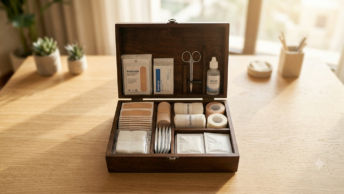
Wound care: adhesive bandages of assorted sizes, sterile gauze pads and rolls, adhesive tape, and antiseptic wipes or solution for cleaning minor cuts common in most work environments.
Bandaging and immobilization: elastic bandages for sprains and strains, triangular bandages for slings, and eye pads for minor eye irritation, particularly relevant in workplaces with dust or debris exposure.
Protective equipment: disposable gloves, with nitrile a common latex-free choice, which double as both first-aid and general hygiene supplies in many workplaces.
Instruments: scissors, tweezers, and a first aid manual or quick-reference card so staff can respond appropriately without guessing.
Burn care: burn dressings or gel, especially relevant for kitchens, workshops, and industrial settings.
Emergency information: a clearly posted list of emergency contacts, the nearest hospital or clinic, and designated first aiders within the workplace.
Industry-Specific Considerations
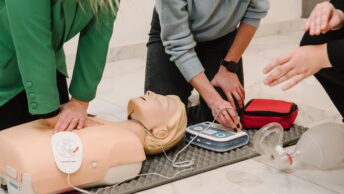
Office environments generally need a lighter kit focused on minor cuts, headaches, and general wellness supplies, since the physical risk profile is lower. Warehouses, logistics, and construction sites typically need more extensive wound care and bandaging supplies given a higher likelihood of cuts, strains, and minor impact injuries, and may also benefit from eyewash solutions if dust or particulates are a factor. Healthcare and clinic settings have their own specific supply needs beyond general first aid and often source directly from a DHA-approved supplier to align with facility standards. Retail and hospitality businesses that interact with the public may want to stock supplies for both staff and occasional customer incidents. In every case, the appropriate mix of supplies and any additional training requirements are best confirmed against current UAE occupational health and safety guidance for your specific sector.
What to Look For When Buying
- DHA-approved sourcing: Choosing a DHA-approved supplier for workplace medical supplies supports consistent quality and traceability.
- Kit sizing: Match the kit size and quantity of consumables to your headcount and the number of physical locations that need coverage.
- Restocking convenience: Look for a supplier that makes reordering consumables like bandages, gloves, and antiseptic straightforward, since these are the items used up fastest.
- Bulk and institutional ordering: Facility managers overseeing multiple sites benefit from suppliers who support B2B and bulk ordering rather than repeated small purchases.
- Clear labeling and organization: Supplies should be easy for any trained staff member to locate quickly during an incident, not just the person who ordered them.
Common Mistakes to Avoid
A common oversight is stocking a workplace kit once during setup and never auditing it again, leading to expired or depleted supplies going unnoticed until they’re needed. Under-stocking gloves and antiseptic wipes, the items used most frequently, is another frequent gap, since these need more frequent restocking than items like scissors or a first aid manual. Some workplaces also centralize all supplies in one location when a busy site with multiple floors or buildings would be better served by several accessible kits. Finally, failing to assign clear responsibility for maintaining the kit often means no one notices when supplies run low. For UAE businesses looking to equip one site or many, Medicalmart’s first aid category at https://www.medicalmart.ae/category/firstaid offers a practical starting point, with bulk ordering available for institutional buyers.
Frequently Asked Questions
Are UAE workplaces required to have a first aid kit?
UAE occupational health and safety guidance generally expects employers to provide reasonable first aid provisions, with specifics depending on workforce size, industry, and applicable regulations for your sector; check current requirements for your specific business type.
How often should workplace first aid supplies be restocked?
High-use items like bandages, gloves, and antiseptic wipes should be checked and restocked regularly, while the kit as a whole is worth auditing every few months for expired items.
Can Medicalmart supply first aid kits for multiple office locations?
Yes, Medicalmart supports B2B and bulk ordering for institutions with multiple sites across the UAE; contact pharmacy@medicalmart.ae or +971 55 360 3679 to discuss requirements.
Do workplace first aid kits need prescription medicine?
No, workplace kits are built from OTC supplies, wound care materials, and equipment; Medicalmart does not dispense prescription medicines, so all kit components are OTC and equipment items.