

This guide explains the main types of wound dressings available for home use, how to match a dressing to a wound, and the warning signs that mean it is time to stop self-treating and see a healthcare provider. It is written for caregivers and individuals managing minor wounds, post-procedure care, or chronic wound maintenance at home in the UAE.
This article is for general informational purposes only and does not replace professional medical advice. Consult a licensed healthcare provider for guidance specific to your condition.
Why Dressing Choice Matters
Not every wound needs the same covering. A dressing that works well for a dry, healing scrape can actually slow healing on a wound that is producing a lot of fluid, and vice versa. Choosing correctly helps keep the wound clean, manage moisture, and reduce the risk of infection while it heals. If a wound was created or is being managed under a doctor’s or nurse’s care, always follow their specific dressing instructions first — this guide is meant to help you understand your options, not override professional direction.
Common Dressing Types and General Uses
Adhesive bandages and plasters. Best suited to small cuts, scrapes, and blisters with minimal fluid. They offer light protection and are typically changed daily or when soiled.
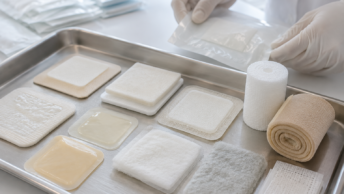
Gauze and non-adherent pads. A versatile option for a wide range of minor to moderate wounds. Non-adherent pads are designed to reduce sticking to the wound bed, which can make changes less painful. Gauze often needs a secondary layer, such as tape or a bandage roll, to stay in place.
Foam dressings. Useful for wounds with moderate to heavy drainage, such as some pressure injuries or post-surgical wounds, because the foam absorbs fluid while cushioning the area. These are often left in place longer than basic gauze, per the packaging or clinician instructions.
Hydrocolloid dressings. These create a moist healing environment and are commonly used on lower-drainage wounds, blisters, or as a preventive layer over areas prone to friction. They tend to stay on for several days at a time.
Hydrogel dressings. Useful for drier wounds that benefit from added moisture, such as some minor burns or dry healing wounds. They are generally not intended for heavily draining wounds.
Transparent film dressings. A thin, waterproof layer often used to protect IV sites, minor wounds, or as a secondary cover over another dressing. They allow the wound to be monitored without removal.
Antimicrobial or silver dressings. Sometimes recommended by a healthcare provider for wounds at higher risk of infection. These are typically used under clinical guidance rather than chosen independently.
Matching a Dressing to the Wound
A simple way to think about dressing selection is by drainage level and wound depth. Dry or minimally draining wounds generally do better with a dressing that adds or locks in moisture, such as a hydrogel or hydrocolloid. Wounds with moderate to heavy drainage generally need an absorbent option, such as foam or thicker gauze, changed more frequently. Deeper wounds, wounds near joints, or wounds that need packing are best managed with direct input from a nurse or doctor, since the wrong approach can slow healing.
Basic Home Wound Care Practices
- Wash your hands before and after touching the wound or dressing.
- Follow the change frequency recommended on the product packaging or by your healthcare provider — over-changing can disturb healing tissue, while under-changing can trap excess moisture or bacteria.
- Keep a small supply of saline or wound cleanser, gloves, and tape on hand so changes can be done cleanly.
- In the UAE’s warmer, humid months, be mindful that adhesive dressings may lift more easily with sweat; checking adhesion more frequently and keeping the area dry between changes can help the dressing stay in place.
- Store dressings in a cool, dry place, away from direct sunlight, to preserve their adhesive and material properties.
When to See a Doctor
Seek medical attention if you notice increasing redness, swelling, warmth, or pain around the wound; pus or a foul odor; fever; a wound that is not showing signs of improvement after a week or two; or a wound in someone with diabetes, poor circulation, or a weakened immune system. These can be signs of infection or delayed healing that need professional assessment rather than a change in dressing type.
Stocking Up for Home Care
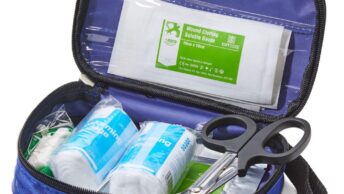
Keeping a basic wound care kit at home — a mix of adhesive bandages, gauze, non-adherent pads, tape, and saline — means you are prepared for everyday cuts and scrapes as well as ongoing dressing changes for a healing wound. You can browse Medicalmart Pharmacy’s full range of wound care supplies at https://www.medicalmart.ae/category/woundcare, with delivery available across all seven Emirates.
Frequently Asked Questions
How often should I change a wound dressing?
This depends on the dressing type and the wound itself — some, like basic gauze, may need daily changes, while hydrocolloids can stay on for several days. Always follow the product instructions or your healthcare provider’s specific guidance for your wound.
Can I use a hydrocolloid dressing on a heavily draining wound?
Generally no — hydrocolloid dressings are designed for wounds with lower drainage, and a heavily draining wound is usually better suited to a more absorbent option like foam. Ask your healthcare provider if you’re unsure which type fits your situation.
Is it normal for a healing wound to look slightly red?
Mild redness immediately around a healing wound can be a normal part of the process, but redness that is spreading, darkening, or accompanied by warmth, swelling, or pain is not and should be checked by a doctor.
Do I need a prescription to buy wound dressings in the UAE?
No, standard wound care dressings and supplies are available over the counter and do not require a prescription, though specialized or medicated dressings may be recommended by a clinician as part of a treatment plan.
Does Medicalmart Pharmacy deliver wound care supplies to Sharjah, Ajman, Fujairah, Ras Al Khaimah, and Umm Al Quwain, not just Dubai and Abu Dhabi?
Yes. Medicalmart Pharmacy delivers across all seven Emirates using the same standard 7–10 day delivery window and flat AED 20 shipping fee, regardless of which Emirate you’re ordering to.
Is there a difference between ordering from the Dubai branch and the Abu Dhabi branch?
No — both the Al Hudaiba, Dubai branch and the Khalidiya, Abu Dhabi branch draw from the same catalog and pricing, so an order placed online is fulfilled the same way regardless of which branch is closer to you. In-person viewing is available at either location.
Which Emirate has the nearest physical branch to visit before buying?
Medicalmart Pharmacy has two physical branches — Al Hudaiba in Dubai and Khalidiya in Abu Dhabi. Customers in Sharjah, Ajman, Fujairah, Ras Al Khaimah, or Umm Al Quwain order online with delivery, since there is currently no physical branch in those Emirates.