
Choosing the right wound dressing affects healing time, comfort, and how often a wound needs to be re-dressed. This guide explains the differences between foam, hydrocolloid, and alginate dressings, when each is typically used, and what to check before you buy. It is written for caregivers, home-care patients, and clinical buyers sourcing supplies in the UAE.
This article is for general informational purposes only and does not replace professional medical advice. Consult a licensed healthcare provider for guidance specific to your condition.
Who needs this
Advanced wound dressings are used by home caregivers managing pressure injuries, surgical wounds, or chronic ulcers under a clinician’s guidance, as well as by clinics, nursing homes, and home-healthcare providers across the UAE that need to stock a range of dressing types for different patients. Anyone selecting a dressing type for the first time should do so on the recommendation of the treating doctor, wound-care nurse, or discharge team, since the right choice depends on the wound’s depth, amount of drainage, and stage of healing.
Types available
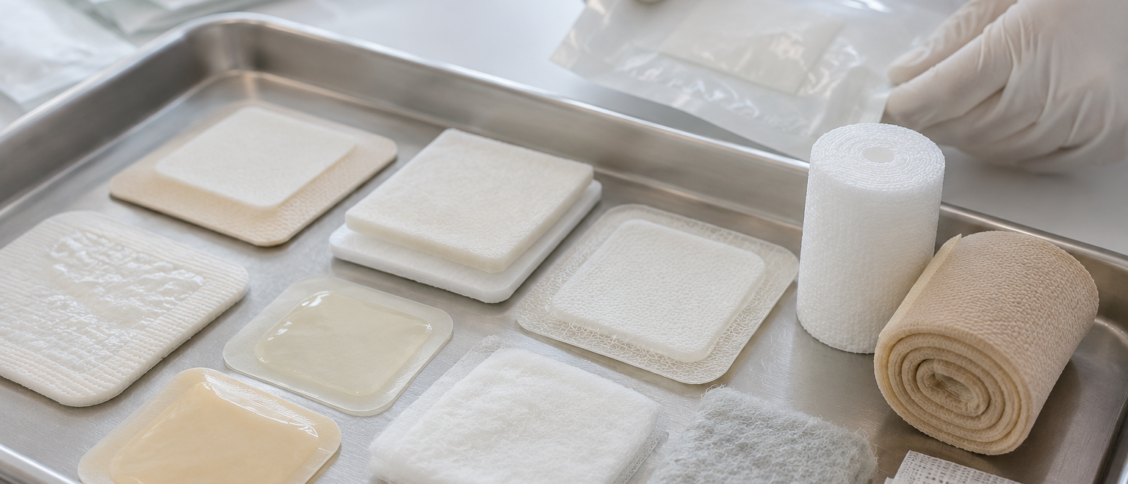
Foam dressings are soft, absorbent pads suited to wounds with moderate to heavy drainage, such as pressure ulcers or post-surgical wounds. They cushion the area, help regulate moisture, and are generally comfortable under clothing or bandages for extended wear between changes recommended by a clinician.
Hydrocolloid dressings form a gel as they interact with wound fluid, creating a moist healing environment. They are commonly used on lighter-draining wounds, such as minor pressure sores or abrasions, and their adhesive border allows them to stay in place for several days, which can be useful for wounds in hard-to-dress locations.
Alginate dressings, made from seaweed-derived fibers, are highly absorbent and are typically chosen for wounds with heavy drainage or minor bleeding. They are often used as a primary layer under a secondary dressing and are removed or changed according to the care plan set by the treating clinician.
What to look for
When comparing products, consider absorbency level, wear time, and whether the dressing has an adhesive border or requires a secondary cover dressing. Sterility and packaging integrity matter, so check that seals are intact on arrival. In the UAE’s warm, humid climate, adhesive performance can vary, so caregivers managing dressings over multiple days should watch for lifting edges and follow their care team’s guidance on how often to check and replace dressings. For institutional buyers, look for suppliers who can support consistent bulk ordering so that stock does not run low across multiple patients or wards.
Common mistakes to avoid
A frequent mistake is selecting a dressing type based on convenience rather than the wound’s actual drainage level, which can slow healing or cause skin irritation around the wound edge. Another is leaving a dressing in place longer than instructed, especially in hot weather when perspiration can affect adhesion and hygiene. Caregivers should also avoid switching dressing types without checking with the discharge nurse or doctor first, since different products interact differently with a healing wound.
Stock rotation is worth attention too: dressings have shelf lives, and clinics or home-care setups keeping a range of foam, hydrocolloid, and alginate products on hand should check expiry dates periodically, particularly for less frequently used sizes.
If you’re ready to compare options, you can browse Medicalmart’s wound care category at https://www.medicalmart.ae/category/woundcare for the current range of foam, hydrocolloid, and alginate dressings available for delivery across all seven Emirates.
Frequently Asked Questions
What is the main difference between foam, hydrocolloid, and alginate dressings? Foam dressings absorb moderate-to-heavy drainage and cushion the wound, hydrocolloid dressings create a moist healing gel and suit lighter drainage, and alginate dressings offer the highest absorbency for heavily draining or minorly bleeding wounds.
Can I choose my own wound dressing type without asking a doctor? For advanced or chronic wounds, it’s best to follow the dressing type recommended by your treating clinician or discharge nurse, since the correct choice depends on the wound’s condition, which they are best placed to assess.
How often should an advanced wound dressing be changed? Change frequency depends on the dressing type and the wound itself, so follow the specific schedule given by your care team rather than a general rule.
Does Medicalmart deliver wound care supplies across all Emirates? Yes, Medicalmart delivers to all seven Emirates, with standard delivery of 7-10 days for in-stock items and a flat AED 20 shipping fee.