
Cardiopulmonary resuscitation (CPR) training saves lives — but the quality of training depends heavily on the equipment used. Poor-quality manikins that give incorrect feedback, worn-out face shields, or missing accessories undermine training outcomes. This guide covers everything a training coordinator in the UAE needs to know about selecting, sourcing, and maintaining CPR training equipment — from manikins and accessories to AED trainers and first aid bags.
MedicalMart is a DHA-approved supplier of CPR training manikins and accessories, with fast delivery across all UAE Emirates.
Why CPR training equipment matters in the UAE
The UAE has invested significantly in public health readiness. Dubai Civil Defence, DHA, and the Abu Dhabi Department of Health all have guidelines encouraging or mandating CPR readiness in various settings. At the same time, sudden cardiac arrest outside hospitals has a survival rate that is dramatically improved when bystander CPR begins within the first 3–5 minutes.
In 2026, an increasing number of UAE organisations are incorporating CPR training as part of:
- Annual workplace health and safety programmes (mandatory in many DHA-licensed facilities)
- School health curricula — several Dubai and Abu Dhabi schools now include basic life support (BLS) in senior year programmes
- Building and facilities management — RERA-registered building management companies in Dubai are increasingly required to train wardens in CPR and AED use
- Healthcare facility staff training — mandatory BLS recertification for all clinical and non-clinical staff
Investing in the right training equipment means more realistic, effective sessions and a reusable asset that pays for itself over many training cycles.
CPR manikins: the core of any training setup
What makes a good CPR manikin?
A quality training manikin must:
- Provide accurate depth feedback — adult CPR requires compressions of 5–6 cm; a manikin that does not clearly indicate when this depth is achieved produces poor training outcomes
- Have a realistic feel — chest resistance should approximate human anatomy
- Include a replaceable face/lung system — for hygiene between trainees
- Be durable — capable of hundreds of training sessions without structural failure
- Offer visual or auditory feedback — many modern manikins include LED or clicker indicators for correct compression depth and rate
PRESTAN Professional Manikins
PRESTAN is one of the leading CPR manikin brands used by training organisations globally and widely used across UAE BLS training providers. MedicalMart stocks the PRESTAN professional range:
PRESTAN Adult Manikin (single) Full-size adult manikin with realistic chest compression feel and the PRESTAN CPR Rate Monitor — a built-in LED indicator that shows correct compression rate (100–120 per minute). Lung system included; face shield replacements sold separately.
Available in standard skin tone and dark skin tone — important for equitable representation in diverse UAE training environments. Available at MedicalMart from AED 890 per unit
PRESTAN Adult Manikin 4-Pack The most cost-effective option for organisations training groups — four manikins allow simultaneous hands-on practice, dramatically increasing training throughput per session. Available at MedicalMart: AED 3,200–3,500 per 4-pack
PRESTAN Professional Female Series 2000 Manikin Designed with anatomically correct female chest geometry — important for training rescuers who may unconsciously hesitate when performing CPR on female patients (a documented training bias). Available in single and pack configurations. AED 1,890 per unit at MedicalMart
PRESTAN Infant and Child Manikins Paediatric manikins for BLS training covering infant (under 1 year) and child (1–8 years) resuscitation protocols. Essential for clinics, schools, and childcare facility training programmes.
Laerdal Little Anne and Anne QR
Laerdal manikins are another globally trusted option, used extensively by hospitals and EMS training programmes. The Little Anne (adult, female features) and the Little Anne QR (with wireless skill reporting) are popular for professional clinical training where post-session performance data is valuable.
Essential accessories for every CPR training kit
A manikin alone is not a complete training setup. Every organisation should stock:
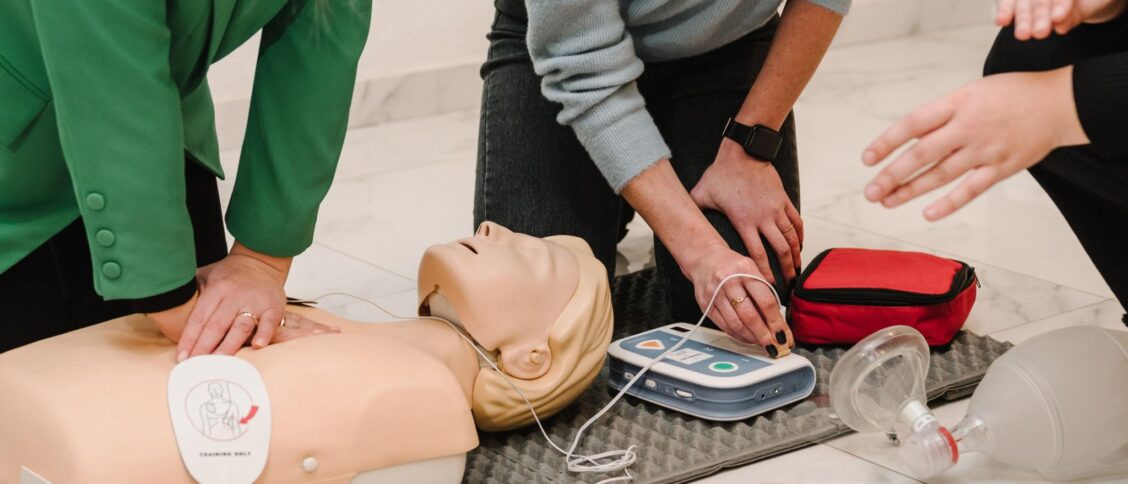
Face shields and lung bags Single-use face shields and replaceable lung bags are hygiene essentials. They must be replaced between each trainee and restocked after every training session. Always buy more than you think you need — shortages mid-session disrupt training.
Browse MedicalMart’s CPR parts and accessories.
CPR pocket mask For skills practice and real-world emergency use — a pocket mask with a one-way valve allows safe rescue breathing. Every trained first aider in your organisation should carry one. Available in fold-flat keyring designs.
Ambu bag (bag-valve-mask, BVM) Essential for both training and clinical emergency use. BVMs allow trained rescuers to deliver ventilations without mouth-to-mouth contact and with greater volume control than a pocket mask. Browse MedicalMart’s Ambu bag range.
Training AED (Automated External Defibrillator) If your organisation uses or plans to use an AED, training on a dedicated AED trainer is essential. AED trainers mimic the shape, sound, and interface of real AEDs without delivering a real shock — they are safe for repeated use in training scenarios. They pair with your CPR manikin for full chain-of-survival training.
Browse MedicalMart’s defibrillator range for both training units and real AEDs suitable for workplace deployment.
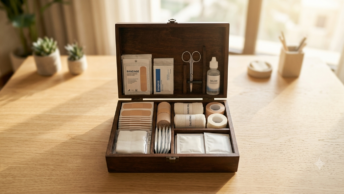
First aid training bag A training bag lets instructors demonstrate first aid kit use, bandaging, and bleeding control alongside CPR. Browse MedicalMart’s first aid range.
How many manikins does your organisation need?
A practical rule for group training:
- 1 manikin per 2–3 trainees is the minimum for effective hands-on practice
- For a group of 20 trainees with a 2-hour session, 7–10 manikins allows every participant meaningful compression time
- For large organisations (>100 staff), a 4-pack of adult manikins plus 1–2 paediatric units is a cost-effective starting point
Manikins can also be rented from certified first aid training providers in the UAE for one-off training events — but for organisations that train annually, ownership is more cost-effective within 2–3 training cycles.
UAE regulatory context: when is CPR training mandatory?
Under DHA healthcare facility licensing requirements (updated November 2024), clinical and non-clinical staff in licensed health facilities must hold current BLS certification. Requirements vary by facility type and staff role — consult your DHA facility licence conditions for specifics.
Dubai Civil Defence requires designated fire wardens (typically 1 per floor or per 20 staff) to hold basic first aid and CPR certification in buildings above a certain occupancy threshold.
Abu Dhabi’s Department of Health has published similar requirements for DOH-licensed facilities.
For schools, the UAE Ministry of Education curriculum framework increasingly includes age-appropriate first aid content at secondary level.
Caring for and storing CPR manikins
Proper maintenance extends manikin life significantly:
- Clean after every use — wipe down the manikin face, chest, and all surfaces with the manufacturer-recommended disinfectant solution (typically 70% isopropyl alcohol wipes). Never immerse in liquid.
- Replace face shields after every trainee — do not reuse face shields between participants
- Inspect the chest mechanism — check for cracks, wear, or stiffness in the compression mechanism after every 50+ sessions
- Store in the carry bag or case — protect manikins from dust and UV exposure when not in use; UAE sun and humidity can degrade materials over time
- Check lung bag seals — an airtight seal is essential for correct rescue breathing feedback; replace lung bags when seals degrade
Frequently asked questions
Do CPR manikins expire? Manikins do not have a formal expiry date, but their mechanical components (compression mechanism, face system, lung bags) degrade over time and with use. A well-maintained PRESTAN manikin should last 5–8 years of regular use with routine accessory replacement.
Can I use a real AED to train on, rather than a training AED? No. Real AEDs must never be used for training — they deliver therapeutic shocks. Always use a dedicated training AED (clearly marked “TRAINER”) with manikins. Using a real AED in training also risks depleting the device’s battery for genuine emergencies.
Does MedicalMart sell manikins for infant CPR training? Yes. We stock paediatric and infant manikins suitable for training in paediatric BLS protocols. Contact our team to confirm current stock.
Can MedicalMart supply training equipment to Abu Dhabi and other Emirates? Yes — we deliver CPR training equipment across all seven UAE Emirates. Delivery to Abu Dhabi, Sharjah, and northern Emirates typically takes 2–3 working days.
Are PRESTAN manikins approved for use in DHA-accredited BLS courses? PRESTAN manikins are used by numerous DHA-accredited and American Heart Association (AHA)-affiliated training centres across the UAE. Verify the specific requirements of your accrediting organisation, as they set equipment standards independently.
Can we order replacement face shields and lung bags in bulk? Yes — MedicalMart supplies replacement accessories in bulk for training organisations. Contact pharmacy@medicalmart.ae with your quantities and we will provide pricing.
Order CPR training equipment with UAE-wide delivery
Browse MedicalMart’s full CPR training range — including PRESTAN professional manikins, training AEDs, Ambu bags, pocket masks, and all accessories — with competitive AED pricing and delivery across all Emirates.
For group quotes and bulk orders, contact: pharmacy@medicalmart.ae | +971 55 360 3679
This article is for informational purposes. CPR training should be delivered by qualified instructors using current AHA, ERC, or RCUK guidelines. Contact a DHA-accredited training provider in your Emirate for certified course delivery.