

Recovering from surgery, injury, or a mobility-limiting condition often continues well beyond clinic visits, and having the right equipment at home can support that process between sessions. This guide introduces the main categories of home physiotherapy equipment, what to consider when choosing between options, and mistakes people commonly make when setting up a home rehab space. It’s written for patients, caregivers, and anyone continuing a rehabilitation plan set out by a physiotherapist.
Who Needs Home Physiotherapy Equipment
Home rehab equipment is typically used by people recovering from orthopedic surgery, stroke, sports injuries, or age-related mobility decline, as well as those managing chronic pain or balance issues. Caregivers supporting a family member’s recovery also rely on this equipment to help maintain consistency between physiotherapist appointments. In every case, equipment should complement a plan set by a qualified physiotherapist, not replace it.
Types of Equipment Available
- Mobility aids — walking frames, canes, crutches, and rollators for individuals regaining balance or weight-bearing capacity.
- Resistance and strengthening tools — resistance bands, hand grip trainers, and light exercise equipment used to rebuild strength gradually.
- Balance and coordination tools — wobble boards and balance cushions, often used under professional guidance.
- Support and positioning aids — cervical collars, lumbar supports, and joint braces for stabilizing an area during recovery.
- Heat and cold therapy products — hot and cold packs used to manage discomfort around exercise sessions, as advised by a physiotherapist.
- Electrotherapy and TENS devices — used by some patients under professional guidance for pain management support.
What to Look For
- Fit and adjustability — mobility aids like walkers and crutches should be height-adjustable to the user, since an incorrect fit can affect both comfort and safety.
- Material and build quality — look for stable, non-slip bases on mobility aids, and breathable, skin-friendly materials on braces and supports worn for extended periods.
- Ease of cleaning — equipment that’s touched frequently should be easy to wipe down, particularly relevant in the UAE’s warm climate where sweat and humidity are common.
- Portability — foldable or lightweight options are useful for patients who need to travel between rooms, floors, or to clinic appointments.
- Physiotherapist recommendation — always match equipment choice, resistance level, or brace type to what your physiotherapist has specifically prescribed for your recovery stage.
Setting Up a Home Rehab Space
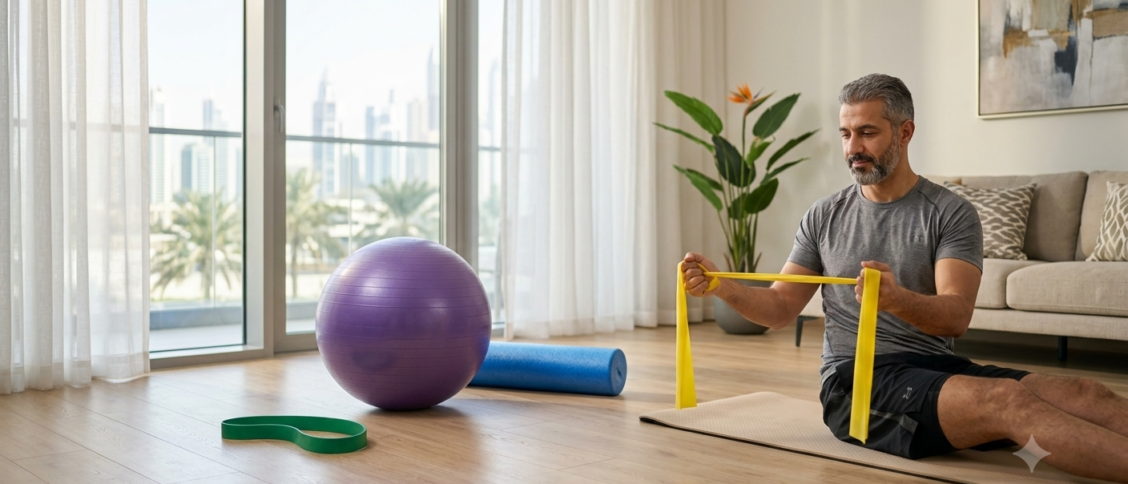
A small, dedicated area with clear floor space, good lighting, and non-slip flooring makes exercises safer and easier to stick to. Keep frequently used items — resistance bands, supports, or hot/cold packs — within easy reach, and store mobility aids like walkers or canes somewhere they won’t become a trip hazard themselves.
Common Mistakes to Avoid
- Buying resistance bands or weights at a difficulty level that hasn’t been approved by your physiotherapist, risking re-injury.
- Using a mobility aid at the wrong height, which can strain the back, shoulders, or wrists.
- Skipping regular equipment checks — worn crutch tips or frayed resistance bands can fail unexpectedly.
- Relying on heat or cold therapy without guidance on how long or how often to apply it.
- Continuing to use braces or supports well past the period your physiotherapist recommended, which can sometimes slow natural strength recovery.
If you’re setting up a home rehab space or replacing worn equipment, you can browse a wide selection in Medicalmart’s physiotherapy equipment category at https://www.medicalmart.ae/category/physiotherapy-equipment-, with delivery available across all seven Emirates.
Frequently Asked Questions
Do I need a physiotherapist’s approval before buying home rehab equipment?
It’s strongly recommended — the right equipment and resistance level depend on your specific recovery stage, and your physiotherapist can guide the right choices for your plan.
What’s the difference between a rollator and a standard walker?
A rollator typically has wheels and often a seat, suited to users with reasonable balance who need light support, while a standard walker offers more stability for those with greater balance or strength limitations; your physiotherapist can advise which suits your needs.
How do I know if a mobility aid is the correct height?
Generally, hand grips should be adjusted so your elbow has a slight bend when standing upright and holding the device, but this should be confirmed by your physiotherapist or a qualified fitter.
Can I use heat and cold packs interchangeably during recovery?
No — heat and cold therapy serve different purposes and are recommended at different stages or for different symptoms, so follow your physiotherapist’s specific guidance rather than alternating on your own.