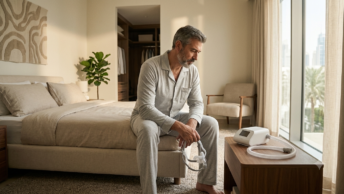
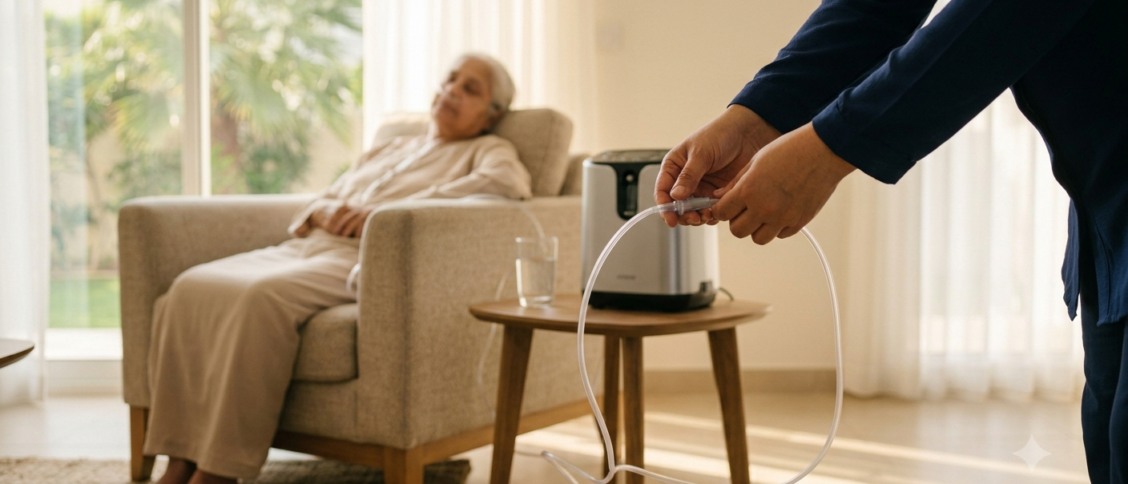

This guide walks caregivers through the practical steps of setting up home oxygen therapy in the UAE: understanding the equipment options, preparing the home environment, and managing day-to-day safety and logistics. It focuses on setup and equipment decisions, not on determining whether oxygen therapy is medically appropriate, which is a decision for the patient’s doctor.
This article is for general informational purposes only and does not replace professional medical advice. Consult a licensed healthcare provider for guidance specific to your condition.
Understand What Your Doctor Has Prescribed
Before setting anything up, confirm the specifics your healthcare provider has outlined, since these details determine what equipment you need:
- Flow rate and duration: Different concentrators support different flow ranges, and your provider will specify what’s needed.
- Delivery method: Nasal cannula versus mask, depending on the patient’s condition and comfort.
- Usage pattern: Continuous use, use during sleep only, or use during specific activities.
Never adjust oxygen flow settings without your healthcare provider’s guidance, and always follow their instructions over general product information.
Types of Home Oxygen Equipment
Oxygen concentrators draw in room air and filter it to deliver concentrated oxygen, and are the most common choice for ongoing home use because they don’t require refilling like tanks do. They do require a stable power source.
Portable oxygen concentrators are lighter, battery-operated units designed for patients who need to move around the home or travel outside it, though they typically deliver lower flow rates than stationary units.
Oxygen cylinders/tanks store compressed oxygen and can serve as a backup during power outages or as the primary source for short-term needs, but they require monitoring of remaining volume and periodic refilling or replacement.
Your healthcare provider or respiratory therapist can advise which combination suits the patient’s specific needs, including whether a backup source is recommended.
Preparing the Home Environment
Placement: Position the concentrator in a well-ventilated area, away from walls or furniture that could block airflow into the unit, and away from curtains or fabric that could obstruct the intake.
Power supply: Since concentrators run on electricity, identify a dedicated, stable outlet and consider a backup plan for power interruptions, which can occasionally occur during extreme weather events in the region.
Tubing management: Long oxygen tubing across a room creates a trip hazard. Route tubing along walls or under furniture edges rather than across open walkways, and check regularly for kinks that could restrict flow.
Climate considerations: In UAE indoor environments where air conditioning runs frequently, especially through the summer months, dry air can affect comfort during oxygen therapy. Ask your healthcare provider whether a humidifier attachment is suitable for the setup.
Fire and Electrical Safety
Oxygen supports combustion, so safety practices around the equipment matter:
- Keep the oxygen source away from open flames, lit candles, and smoking materials.
- Avoid using petroleum-based products (like certain lip balms or lotions) near the oxygen delivery point unless approved by your provider.
- Check that electrical cords for the concentrator are in good condition and not overloaded on a shared power strip.
- Keep a fire extinguisher accessible in the room where oxygen equipment is used, as a general home safety precaution.
Daily and Weekly Maintenance
- Filters: Concentrators typically have filters that need regular cleaning or replacement to keep airflow consistent; follow the manufacturer’s schedule.
- Tubing and cannula/mask: Replace or clean these on the schedule recommended by the equipment manufacturer or your healthcare provider to reduce infection risk.
- Humidifier bottles (if used): Clean and refill with the appropriate water type as instructed, since stagnant water can support bacterial growth.
- Backup supply check: If a backup cylinder is part of the setup, periodically check the gauge to confirm it’s ready for use.
Sourcing Equipment in the UAE
When purchasing home oxygen equipment, buying from a DHA-approved supplier gives some assurance around product sourcing. Since concentrators and related supplies can be needed urgently after a hospital discharge, plan ahead: standard delivery for in-stock items is 7–10 days, with a flat AED 20 shipping fee across all seven Emirates. If a clinic or home healthcare agency needs equipment for multiple patients, B2B and bulk ordering options are also available.
You can browse respiratory and airway equipment, including oxygen concentrators and related supplies, at https://www.medicalmart.ae/category/airway-and-respiratory.
Frequently Asked Questions
Do I need a doctor’s prescription to buy an oxygen concentrator in the UAE? Requirements can vary, but oxygen therapy should always be started and managed under the guidance of a licensed healthcare provider, who will specify the flow rate, duration, and delivery method appropriate for the patient.
What’s the difference between a stationary and portable oxygen concentrator? A stationary concentrator is typically plugged into a fixed power source and used at home, while a portable concentrator is battery-powered and designed for movement or travel, generally at lower flow rates.
How often should oxygen tubing and filters be replaced? This depends on the specific device and usage, so follow the manufacturer’s recommended schedule or your healthcare provider’s instructions rather than a generic timeline.
Is it safe to use an oxygen concentrator during a power outage? A concentrator requires continuous electrical power to function, so caregivers should discuss a backup plan, such as a backup cylinder, with their healthcare provider in case of outages.